Showing posts with label books. Show all posts

01 January 2025

And the 2025 classic read is ...

Middlemarch. Yes, I've read it before - I read it in college for English 272, which was a survey class on some 19th century Brit Lit classics. (I still have the asssigned copy, which is why I know what specific class it was ... I wrote it inside the cover.)

But Middlemarch slithered into my consciousness because of that column in the New York Times Book Review called "By The Book" - a weekly interview with some author who has just published something. I skim it every week, and often it's too twee for words, but what I started to notice was how many people mentioned Middlemarch in response to a question.

  • What books are on your night stand?
  • What books are you embarrassed to admit you’ve never read?
  • What’s the last book you read that made you laugh?
  • What’s the last great book you read?
  • Who is your favorite fictional hero or heroine?

Because this had come up in conversation, on Sunday, my sister texted me a picture of the 12/29/2024 book review because yes, Elda Rotor named Middlemarch as something she was embarrassed not to have read.


In a fit of something or other, I sat down at my computer and I methodically searched the Times website for the entirety of 2024, and located 51 of the 52 "By The Book"columns. There may have been one on 9/1/24 - but I couldn't surface it. And 11 times in 51 weeks, someone answered Middlemarch. That's 20 or 22% of the time! (Math is complicated because Robert Kagan gave Middlemarch as the answer to two different questions in the same interview.)  If you would like to see the fruits of my labors, I made a spreadsheet - it's here

This is a long way around to explain why I'm cracking Middlemarch open later.

02 January 2021

Book Log 2020

It is a perennial conundrum that I used to rail about the child's "required" book logs, back when she was in elementary school, and yet I delight in recording the books I've read via my Goodreads account. I *think* I read 68 books in 2020.

Last year, I started tagging books as male/female authors, and fiction/non-fiction. 

It took a little data manipulation to figure out what I'd read, but I can report that I made a conscious effort to read books by women and in fact, did so: I read 46 books by women, and 21 by male authors. (One book was an anthology, hence 46 + 21 does not equal 68.) 

Other stats: I read 19 library books, 7 mysteries, 2 books of poetry, and 2 cookbooks. 11 books were non-fiction, 6 were re-reads, and I abandoned 6. 

I rarely give star ratings to the books I log on Goodreads, and my "reviews" are really just notes to self - they aren't intended to be comprehensive reviews. That said, I did give four stars to these good books: 

And five stars to these: 

The Mendelsohn reminds me - I read Emily Wilson's translation of The Odyssey, as well as Maria Dahvana Headley's translation of Beowulf. And I was amused to find myself shelving the Headley RIGHT NEXT TO the Seamus Heaney translation of Beowulf. How convenient to have the translator's names so similar, so as to make the filing of Beowulf so satisfying. (It is entirely possible that we have at least another Beowulf, but I did not check.) Reading An Odyssey shortly after The Odyssey was good - it gave me a lot of insight into the book. Similarly, I read Headley's The Mere Wife before I read her Beowulf; The Mere Wife is a modern day novel riffing on the Beowulf tale, and helped me figure out some of the bones of the poem. [It occurs to me that I tagged neither Beowulf nor The Odyssey as poetry...perhaps I should have!] 

Possibly the oddest book I read was one on fungi. Funguses.  Merlin Sheldrake's book is called Entangled Life: How Fungi Make Our Worlds, Change Our Minds & Shape Our Futures - and it is FASCINATING, so much so that I gave two copies away to friends. If you don't want to read a book about fungi, check out Sheldrake's Instagram post, where he eats his book. There's a fungus among us. 

The last book I finished in 2020 was one I got for Christmas: The Year of Knots. It's kind of a "how to" book - but it's both how to tie (some knots) and how to be more creative in your life. I've now learned to tie three new decorative flat knots, and I've even memorized one of them. I'm not sure that I'll be taking up macrame in 2021, but stranger things have happened. 

20 January 2020

Easter eggs and other unexpected pleasures

I read. A lot. Maybe not as much as some, but I logged 81 books in GoodReads last year. If I were more organized, I'd be able to tell you the ratio between fiction and non-fiction. But 36 were library books. A bunch were little obsessions:

Some were books I feel like I should have read a long time ago: I loved Willa Cather's The Song of the Lark and I think of it often. I cracked through nine books in a two week beach vacation - starting, aptly, with Pamela Paul's My Life with Bob: Flawed Heroine Keeps Book of Books, Plot Ensues.

Other notable books read include these that I'd read again:

The last book I read in 2019 was The Beekeeper's Apprentice by Laurie R. King. It's the first in a series wherein Mary Russell befriends Sherlock Holmes and becomes his collaborator. My friend Teresa had sent me the first three just before Christmas. Teresa's sent me books before - she sent me all 12 of the Robin Paige mysteries a few years ago.

And what I love about reading the books from Teresa is that she is a die-hard editor: every book that she has passed along to me has at least a few edits (in pencil - only in pencil). She fixes typos. She edits out unnecessary words.


She replaces infelicitous words.


And in A Monstrous Regiment of Women, the 2nd Mary Russell book, which I have just finished, she added page numbers.


It's like finding Easter eggs.


Recently, someone created a Facebook group of OG bloggers - people who'd attended one or more BlogHer conferences back in the day. Reading those posts is an exercise in a lovely sort of nostalgia, even though I was so tangentially attached - there, but not "in". Teresa never went to BlogHer, but I'd never have met Teresa but for the blogging community. There are so many people - mostly women - that are good friends to this day, who have made my life immeasurably richer, who I'd never have met otherwise. I am so grateful for that, even though the platform is not what it was and there's far less reading and writing of blogs going on. Nevertheless, I persist.


10 March 2019

Of shoes, and ships, and sealing-wax — Of cabbages and kings

The Cruelest Month (Chief Inspector Armand Gamache, #3)The Cruelest Month by Louise Penny


Because people I know and love love Louise Penny, I was happy to find a copy of one of her books in the library's free pile.

I confess, though, to being sort of not taken in for the first half of the book. Eventually, though, it clicked into place - especially when the intrigue surrounding Inspector Gamache started to emerge. So, it was okay but I'm not really feeling the need to be a completist and read every one of the Gamache books.

That said, I loved this one passage:
'As always. He came over for dinner last night, you know,' said Peter, opening some jam jars. One still had the wax on top and he needed to dig it out with a knife. 'Hardly ate anything.'

It threw me back to my childhood - my grandmother made jam, and sealed the jars with paraffin, as did the formidable Ruth Bogen, who lived across the street. And I can still remember the way you had to dislodge the wax, popping it in a bit so you could pivot it out in one piece. And then, because my mother never threw anything out, you washed the paraffin disk so that you could add it to the collection of odd candle ends and other bits of wax, for making candles anew one day. Who does that anymore?


03 August 2018

Cluny Brown

There's a periodic book column in the New York Times, called "The Enthusiast", described as "an occasional column dedicated to the books we love to read and reread." Several months ago, the column's subject was Margery Sharp - an author heretofore unknown to me (despite a whole mess of children's books that seem like books I should know). Charmed by the description of "Cluny Brown", I put it on hold at the library. And waited. And read some other books. And finally, a couple of weeks ago, "Cluny Brown" was mine to borrow.

I picked it up and was irrationally pleased to find that it was in that increasingly rare library binding: indestructible buckram. The cover is brown on beige, in a sort of feathered marble pattern.


The title is stamped on the spine in no-nonsense capitals.


And best, because it's a book that's been in circulation since about 1972, it's got a due date card pocket inside the back cover. Which, in my considered opinion, is the best place to store your bookmark.


So much pleasure from the merely physical aspects of the book. And! But! Happily, it is a wonderful book. Cluny is an idiosyncratic character of the highest order, and moves through life in a rather different plane than those around her. A plumber's niece, she has the temerity to take herself to tea at the Ritz "all on her own, to see what it was like."

At the end of Chapter 4, a foreign visitor has arrived at the Devon country house at which Cluny is now in service as a parlormaid.

Thus layer by layer, without any conscious effort, the oyster that was Friars Carmel smoothed and overlaid its grain of sand, producing, like a pearl, a distinguished Professor, met at a British Embassy, recovering from an operation, and fond of horses.

No such process, naturally, was applied to the new parlormaid.


Indeed, her entrance, at the beginning of Chapter 5, is spectacular and distinctly unparlourmaidlike:

Cluny Brown arrived at Friars Carmel in a Rolls-Royce.


Cluny simply doesn't act in the ways in which people expect a plumber's niece parlourmaid to act. She's delightful, and so is the book.

16 October 2016

A Year, Sped Up Towards The End And Yet Static

Most books, you just pick up and read, more or less straight through. At least I do, unless I put the long complicated novel aside for a little detour through a fast mystery. But then there are the books that have a year as an organizing principle. And because I have some deep seated necessity to make order of things, I cannot read that sort of book in one go. Instead, I read the January chapter in January, the May chapter in May, taking a full year to read it. If it's a cookbook, like Nigel Slater's The Kitchen Diaries, I might find myself puttering around in front of the stove, making something with rhubarb when the rhubarb is freshly sending up its pink stalks. A gardening book, like Henry Mitchell's One Man's Garden, has me making lists of bulbs for fall planting in April and contemplating the location of a plot for spring peas, to be prepared and dug in November for March planting.

Last year for Christmas, my mother-in-law gave me a book of Verlyn Klinkenborg's little essays, called The Rural Life. For a time, he had an irregular column on the editorial page of the New York Times, where he waxed rhapsodic about so many things, like snow in January:

By nightfall the snow in the fields was fox-deep.

And spending in March:

Living in the country you learn to spend money in the meanest ways, and you also learn the most extravagant parsimony.

Reading September in September, I was dumbstruck last month, when on September 11 I came across his passage about September 11.

On the first Friday after that sudden Tuesday, I took an afternoon train back homeward out of Manhattan and into the country. Do you remember the day? [snip] Life is bearing witness. In some superficial sense the morning of September 11 sifted us all into difference circles of witnessing. Some people narrowly escaped the collapsing towers. Others watched in terrified safety from windows and rooftops further uptown, Many, like me, saw it live on television from midtown, while an incalculable number of people around the county and the world watched as the tapes were replayed into the night and the coming days. But we're all witnesses, no matter what we saw or how we saw it. Our burden is very different from the burden the victims bore and their families still bear, but it's no less real. Witnessing is a matter of knowledge and of conscience. We know what we saw, and yet we watch the televised tapes play over and over again because we disbelieve what we know.

I've gone back and read that passage several times over, thinking on so many disasters, natural and otherwise, and how we do witness, disbelieving what we're seeing. This election year is a good example.

Yesterday, I found myself on the train to New York without the newspaper (I'd forgotten it) and with a pitiful charge on my more-than-three-years-old-phone (the only problem with which is the pitiful battery). Happily I had the Klinkenborg, but I had to break the rule of read November in November and read December in December, because what was I going to do? Be rigid, or read? I read.

He is a lovely writer and manages to make even a horrible destructive heavy wet December snow sound beautiful:

The snow that fell at home this past weekend was a predatory snow, heavy, wet and punishing. It fell hastily, clumsily, and by the time the storm ended, there was as much precipitation stacked overhead in the tangled woods, waiting to precipitate, as there was on the ground.

Precipitation waiting to precipitate.

* * * * * * * * * * * * * *


Fall is that time when trees change from green to gold and scarlet, the hosta looks decidedly rough around the edges, the tomato plants are mere skeletons though yet with fruit.


And on October 16th, my patient impatiens are still blooming their little hearts out. The suburban life, it is confounding.

01 May 2016

"The Many Portals of The World"

Dear Patti,

On a whim, I picked up your book M Train at the library last week. Okay, maybe it wasn’t quite a whim, because the book was on my Wunderlist of non-fiction books to read, but I hadn’t gone looking for it - it was out on one of the “Rapid Read” shelves up front and it just leapt into my arms. And it blew me away.

Somehow, I had no idea that you were such a gifted writer. Songwriter? Sure. Singer. Yes? But writer of books writer? This is something I didn’t know.

I’m hard pressed to pigeonhole the book. It isn’t really a memoir, it’s too non-linear for that. It might best be described by a line towards the very end: “An aria for a coat, a requiem for a café.” It meanders all over the place, back and forth in time. So many books! So many cups of coffee! Objects galore, intriguing articles of clothing in spades. How did you come to own a pair of Margot Fonteyn’s ballet slippers? [When I was a kid, my mother and I saw her in the audience of a ballet performance, and she refused to give me her autograph. If she were still alive, would she refuse a selfie with a pre-teen fan?]

A few pages before that phrase about the coat and the café, there's a paragraph about lost possessions. Are they still with us?


My house is full of objects, clothes, furniture that mean something to me - but perhaps not to anyone else. Sometimes I want to catalog them, but who has time for that!

Your simple domesticity slayed me – Patti Smith sews curtains, Patti Smith makes packing lists, Patti Smith cleans up her room. I feel stalkerish in that I jotted down books to read (Frankenstein, The Wind-Up Bird Chronicle) and a toothpaste to hunt down (Weleda salt). I’m thrilled to know that you have cats: one of mine is currently chasing a housefly all around my living room and I think she wishes she had wings. You like Luther, and your favorite Doctor is Tennant – could we hang out and watch Broadchurch one day?

I took the book out of the library, and it slipped into being overdue – I never do that! I’m itchy fingers away from buying my own copy, so that I can re-read it and dog-ear some pages and scribble in the margins.

Hey, thanks. I'm grateful to have been given a portal into your world.

Love,

A New Fan

30 October 2015

Imperfect

The problem with used book sales is the sieve of a brain that completely forgets that one already owns that book.

Case in point:


I, buying the book for the cover, picked up a pristine paperback copy of Margaret of the Imperfections not so long ago. When I got home, it went in the stack of books to be read. It was duly read. [It was okay - a couple of the stories were excellent, one needs to be turned into a play, and the rest were unmemorable.] I took it downstairs to shelve it, in alphabetical order with all* of the other fiction in the house, and discovered that I ALREADY OWNED A COPY. Clearly I am imperfect, or my memory is.

Figuring that, given a choice, one should always keep the hardcover in lieu of the paperback**, I plucked the hardcover off the shelf just to see if it rang any bells. I certainly hadn't remembered reading it ever before, but opening it up, I found an inscription on the flyleaf.


Sigh.

I bought the book for my mother, for Christmas, in 1991. When we packed out her house, I took it home and shelved it. I wonder if she ever read it. Probably, it would have been unlike her not to, but I can't know anymore. But our books tell the stories that we've forgotten.


* Well, most. There are books in other rooms.
** And now that I have the hardcover, who wants the paperback? Raise your hand. I'm mailing the paperback to a friend named Margaret.

16 September 2012

2327 Pages Later

You know what's a huge relief?


Deciding that, no, I really don't have to read the four biographies that have piled up by my bed. Really, what more do I need to know about Katharine Hepburn, Keith Richards, Marilyn Monroe, or Steve Jobs? I love her movies, he's a huge rock & roll character, she's an enigma, and he was a genius prick. Right? The books have just been sitting there making me feel bad, and today, I decided that they could go to the big bookshelf in the sky.

Life's too short to read books that you don't really want to read.

03 January 2012

2011: A Year In Books

The very deep irony in my railing about the elementary school book logs that my daughter has to do is that I love keeping track of my own reading via GoodReads. I just looked at my “stats” for 2011, and am happy to report that I read 60 books.

33 were non-fiction, and 27 were fiction. Five of the non-fiction books were cookbooks read cover to cover. I read four books as ebooks, five books from the library. [I don’t keep track of whether books are borrowed or bought used, or whether they’re hard or soft cover.] Fifteen of the fiction books were read aloud to my daughter. I read two books by each of two authors (Eleanor Estes and Peggy Orenstein), and three books by people I know (Melissa Ford, Emily Rosenbaum and Peg Tyre). And I simply didn’t finish one book, because it was tediously banal.

Not included in the total of 60 read are eight books which I’d begun but hadn’t finished as of midnight on New Year’s Eve (not that I was up that late).

My favorite piece of (grown-up) fiction was Wolf Hall – a dense, complicated, fascinating novel about King Henry VIII and his first two wives and a whole lot of other people, all through the prism of Thomas Cromwell. The runner up was a book of short stories by Michelle Latiolais, called Widow.

The four most satisfying non-fiction books were:

And the fifteen books I read to my girl were, in no particular order:

(Oh, and I read other books to her, but they were re-reads upon re-reads of picture books, and I had to draw the line somewhere.)

So, what'd you read last year? Oh, and happy new year!

25 October 2011

Books and Bugs

Books

sandalwood treeA publicist sent me a book last spring, a book that I read, and rather liked, and then I never wrote about it, and now I feel bad because the author is DEAD. Anyway, I did like it, and it's called The Sandalwood Tree, and it's set in India, in two different eras (1947 and 1857) and it's a little bit mystery and a little bit love story and a little bit sub-continent Indian history, and I read it at the same time that I was reading The Secret Garden aloud to my kid, and of course the girl protagonist in The Secret Garden was an orphan who spent her early years in India and there was some odd resonance for me reading them both at the same time. So there you have it. I'm sorry Elle Newmark died before I got around to reading her book.

Bugs

In a fit of something or another, I signed up to do a Halloween party with glow-in-the-dark Zombie Hexbugs. We've had a huge amount of fun with the Hexbugs; they're a completely silly fun toy (even though they have batteries) and the cats are totally amused by them and I wish I had a better camera because watching the glow-in-the-dark bugs on the glow-in-the-dark track is kind of mesmerizing (and completely impossible to photograph with my iPhone). And when I say "we", I mean kids and grown-ups, friends and family, in addition to cats, have been enjoying them.

They also sent along some Hexbug Larvae - cunning little bugs with sensors that make them run away from things. Really, it's kind of amazing to think about the technology that goes into a TOY. You'd think we'd have figured out wireless electricity by now.


Next up, Banks.


Disclosure: We received all the above mentioned stuff from various different publicists. No one paid me to write about any of it; guilt, though, forced me to.

07 October 2011

What Is A Perfect School Anyway?

Despite the fact that I rail about my kid's school a bunch, I should shut up. Really. We have it lucky. Yes, we chose the town we live in because it has a good school system (and chose the house because I can walk to the train station). Yes, we put our child in a daycare program that morphed into a Montessori preschool. Yes, we read to her every single night. I didn't really need to read Peg Tyre's The Good School; I'm already there.

But I did read it, and I liked it a lot - so much so that I reached out to Peg's publicist and asked for a copy to give away. Because I know there are a lot of troubled schools and dysfunctional school systems out there, and this book can help you find a way to make a difference and/or choose the right school for your kid.

Peg isn't preachy, she's not mired in rubrics and jargon. In a conversational and methodical way, she walks through many issues surrounding pre-K through high school education. She skewers standardized testing in a way that non-educators will understand. She advocates for recess, because it helps kids think better. She talks about class sizes, the importance of scientifically based reading instruction, and why good teachers matter. The book is laced with interviews with parents and educators, anecdotes about good and bad school situations, and plenty of hard evidence about best practices. At the end of most of the chapters is a list of "take aways" - bullet points summarizing the main ideas in the chapter. And the last section is a synopsis - what makes a good school and why there are no perfect schools.

If you're interested in reading it, I have that aforementioned copy to give away. Leave me a comment by day's end on Tuesday 10/11 and tell me how you think it could help you. I'll pick a name out of something hat-like and you'll get a copy anon. Oh, and make sure your email address is enabled in your profile OR in the comment.


Disclosure: Nope, no one paid me to tell you any of this. I did get a free copy of the book for my own use, because I offhandly mentioned to the publicist that I was reading a copy from the public library. By sending me a copy, he got the library copy back into circulation - that's a good thing, right? Should I also tell you that my husband went to elementary school AND college with Peg? That's probably irrelevant, and in no way influenced my opinion, but it is part of why the book was on my radar screen.

03 October 2011

Greek Myths and Everyday Life

Greek MythsI had a book of Greek myths when I was a kid, and I remember loving it. So not too long ago, we got the girl a copy of the D'Aulaires' Book of Greek Myths, and last month I read it to her. I love reading to her, but sometimes it starts to feel like a slog. Not with this; I was as enthusiastic about getting to the next adventure as she was.

For me, it was a great refresher on all of those characters and concepts that are around us every day and in so many books. For her, there was plenty of excitement, and lots of "text to self" connection.

I read wistfully about Niobe, whose 14 children were killed by Apollo and Artemis, breaking her heart - "She wept for so long that the gods at last took pity on her and changed her into unfeeling rock." - and I missed Niobe yet again.

Did you know of the wily nature of Sisyphus? He tricked Hades, twice! When he finally ended up in the underworld for good, he was set to work pushing that boulder up the hill, over and over again, sisyphean - like picking up your messy room again and again and again.

We learned that Achilles was "invulnerable except for his heel by which his mother held him over the fire", and I pointed out that that's why the back of your ankle is called the achilles tendon.

Echo, echo, echo. Punished by Hera for being a chatterbox, Echo couldn't form her own words, but "could only repeat the words of others" - and that's where echoes come from.

And you know how you find piles of rocks in the woods, guiding you along the way? Hermes is inside them. He'd killed a servant of Hera's, and she called all the gods together to judge him - "those who found Hermes guilty of a crime were to throw their pebbles at Hera's feet, those who found him innocent were to throw their pebbles at his feet." He was buried in a heap of pebbles, and even today, stands in all of those cairns we've found in the woods.

Atalanta was abandoned in the wilderness, but "she did not perish, for a she-bear heard her cries and carried her gently to her den, nursed her, and raised her with her cubs". And the girl told me Oh, Mama, that's just like Princess Mononoke, who was raised by a wolf-god.

The Persphone / Demeter tale was one we knew from an old Disney short called The Goddess of Spring, which is about 10 minutes long and worth watching on YouTube.

Cerberus and centaurs are both present in the Harry Potter books. Pegasus we know well - (s)he's on the ceiling at Grand Central, and on every Mobil station around.

My old phrygian cap even made an appearance - I knew what it was, from art and gall bladders - I hadn't known that it was King Midas's. See, Apollo gave Midas ass's ears, to ridicule him, and ever after, Midas wore a "tall, peaked cap on his head to hide his long ears".

And for me, the once-upon-a-time music major/flute player, I loved remembering all the tales I know from their musical settings, like Orpheus & Eurydice in Monteverdi's Orfeo. (And then I detoured to Dido & Aeneas, and the snicker-out-loud-when-you're-18 aria that starts off "When I am laid". It's actually "when I am laid in earth", but...well, 18 year old college students?)

And speaking of Orpheus, the girl loved learning that there was a muse called Calliope, because her second grade teacher was named Kalliope.

And of course, reading of war victory by Trojan horse sent us to Monty Python:


The moral of my story? Reread your Greek myths; they are more enchanting than you remember.

22 August 2011

The Eggplant Fainted

A couple of years ago, I got a copy of that Simon Hopkinson book, Roast Chicken and Other Stories, because everyone was going on and on about it. And though I've tried to understand the fuss, I just don't get it. There's no magic in the writing for me, and there's a certain superciliousness that doesn't belong in the kitchen. I like my cookbook writers to be people I want to just hang out with, like Julia Child and Nigel Slater and Deb Perelman. (Someday I'm going to run into Deb at the Union Square Market, and then I'll be all tongue-tied or something, but I really like her cooking sensibilities. And Nigel Slater? She Curmugeon and I are planning to stalk him together. Julia? Nothing needs be said.)

Anyway, I pick up the Roast Chicken book from time to time, hoping for clarity, and finally, I've found one thing in it that maybe makes it all worth it: an eggplant salad - a spiced eggplant stew-like salad to be precise. Hopkinson says it's from Elizabeth David, but I can't find it in any of the eight (8!) Elizabeth David cookbooks I have. (I know, what's the matter with me? Five are in a Penguin boxed set that I got at the library book sale because I just couldn't resist. And of those five I already had two, so would you like a copy of Italian Food or French Country Cooking? Tell me in the comments, and I'll send 'em out.)

The closest thing I found in Elizabeth David is her version of imam bayaldi - the seasonings and ingredients are almost the same, but she stuffs the eggplant and bakes it, unlike Hopkinson's rendition where the vegetables are all cooked on the stovetop. I liked the Hopkinson version enormously. It reminds me a bit of caponata, with an exotic hit from cumin and allspice. Eat the leftovers for lunch tomorrow with a blob of thick Greek yogurt on the side. Oh, and save the cilantro for sprinkling on at the table if you have one of those "cilantro tastes like soap" people in your household.

Spiced Eggplant Salad, adapted from Simon Hopkinson, who got it from Elizabeth David

  • 1 large eggplant
  • salt
  • 1/2 cup olive oil
  • 2 large onions, peeled and roughly chopped
  • 3-4 ripe tomatoes, coarsely chopped
  • 1 t. ground cumin
  • 1 t. ground allspice
  • 1/4 t. cayenne
  • 4 garlic cloves, peeled and finely chopped
  • 2 T. currants
  • 2 T. chopped fresh mint
  • 2 T. chopped fresh cilantro
  1. Cut the eggplant into 1/2-inch cubes; place in a colander and sprinkle with 2 t.salt. Mix together with your hands and leave to drain (in the sink or on a towel) for 30 to 40 minutes.
  2. Heat 1/4 cup of olive oil in a pan and saute the onions until golden. Add the tomatoes and spices. Stew for 5 to 10 minutes, then stir in the garlic and take off the heat. Stir in the currants.
  3. Shake the colander to release some of the moisture from the eggplant, and then dump the eggplant onto a clean dishtowel and blot it dry. Heat up the remaining 1/4 cup olive oil in a big frying pan - to smoking hot - and stir-fry the eggplant until it's golden on all sides and cooked through, about 15 minutes. Add the eggplant to the tomato mixture, and add the fresh herbs. Transfer it to a bowl, and set aside to cool. Adjust the seasoning to taste.

14 June 2011

Books: Not Unread, Yet Not Read Yet

I need a name, a word. What do you call books that you've started, but not finished, but that you can't finish because you only downloaded the first section as a sample to your Kindle?

Since I got the iPod at the beginning of the year, I've downloaded a mess of free samples. It's like a little sickness; someone mentions a book, or I read a review, and instead of putting it on my Amazon wishlist, I just download the sample to Ginger. And then I read the sample, because whatever it is, it won't take longer to read than it takes me to get home on the train. They aren't unfinished - I finished what I had. It's like I've eaten the appetizer, but the dinner and dessert hasn't yet been served. Because I have so damned many books, real live dead tree books, sitting by the side of my bed, I've not committed to finishing any of these sample books - yet.

Just read the sample:

  • Packing for Mars
  • Our Life in Gardens
  • The Winter of our Disconnect
  • The Coffins of Little Hope
  • Outlander
  • Dirty Secret
  • Half Baked
  • Bossy Pants
  • The Dressmaker of Khair Khana
  • The Hunger Games
  • Man Down
  • Stories I’ve Only Told My Mom
  • Love is a Mix Tape
  • Joy for Beginners
  • A Visit from the Goon Squad
  • Country Driving
  • and I shall have some peace there
Read the sample and ordered a hard copy:
Read the sample and then finished it as a library book:
  • The Emperor of All Maladies
Read the sample and then bought the whole Kindle download:

So what are they? In purgatory? No. Interregnum? No. Betwixt and between? Meh.

Help me!

07 June 2011

Books by Friends

It struck me the other day that I know a mess of people who've got actual books out, or about to be. So I thought I'd spread a little book love, just for the hell of it.

The first four are out now, the last two are coming - and if I did all the linking right, you can click the book images for ordering information.


Mel, the Stirrup Queen, wrote "Life From Scratch", a novel of blogging about food while working through some relationships. It's fun, and the kindle edition is on sale at Amazon for $2.99.


My mother-in-law is one of the editors of a book called "In The Words Of Women": letters, diaries, journals, pamphlets, poems, plays, depositions, and newspaper articles by American women in the late 18th century, before and after the Revolution.


My dear friend Julia has compiled a book of devotionals for that oft-difficult first year of motherhood, called "Daily Guideposts: Your First Year of Motherhood".


And Emily's essays about food and cooking and small people, "Cooking on the Edge of Insanity", is now available in print, as well as as an ebook.


Joanne, a/k/a Pundit Mom, has copies of her "Mothers of Intention: How Women & Social Media Are Revolutionizing Politics in America" in her hands, and you too will be able to get one very soon. Since it's a compilation of essays by 21st century women, it might be a good companion for the 18th century "In The Words Of Women".


Last but not least, the enigmatic Teresa has a book of poems coming out in September; you can preorder it by clicking on the image and scrolling until you find "Itching, itching".

Happy reading!


(And no, in case you were wondering, I wasn't paid to write this post - I just like all of these people.)

26 May 2011

Farming Vicariously

I don't know about you, but sometimes I want to run away to a farm. There's a romance about digging in the dirt, growing acres of vegetables, feeding slops to the pig, and spinning wool from the ewes that also give you milk and lambs. I'm unlikely to actually give up my suburban lifestyle and urban paycheck, but that doesn't mean I can't grow some herbs, blueberries, rhubarb and the occasional tomato. Much as I'd like chickens, I can't have 'em because my town requires 10 acres for a chicken (yesterday's chickens were NOT at my house), but I could have bees if I were really possessed. Anyway, kittens are on the agenda before any other livestock.

Needless to say, I find a certain fascination in reading books by people who have actually found a way to live off the land. Joan Dye Gussow's This Organic Life is a how-to book, a polemic, a primer on sustainable agriculture on a very small scale; she lives in a NYC suburb up on the Hudson. Living The Good Life by Helen & Scott Nearing is a little more hardcore. They ran off to a farm near the coast of Maine, and found ways to live there simply and self-reliantly. Despite the forbidding climate, they gardened nearly year-round, relying on cold frames and greenhouses.

In the past couple of months, I've read two newer personal narratives, both by NYC women off to seek another life in farming.

Angela Miller, a literary agent turned cheese maker, doesn't actually give up her life in NYC - she becomes a weekend farmer - but she does seem to get her hands dirty and to know what she's talking about. Unfortunately, while I learned a bunch about cheese making and goat husbandry in her book Hay Fever, Miller came across as distinctly unlikeable and totally full of herself. I've no desire to knock on her Vermont door, even though her Consider Bardwell cheese is pretty good. (Then again, she has a hired cheesemaker making it...)

The Dirty Life, on the other hand, is by a charming woman named Kristin Kimball, who does move part and parcel - falling hard for a Swarthmore-educated farmer and finally marrying him. They create a "full diet" farm in the Adirondacks, with the idea that it sustain many families on a CSA model, but including grain, meat, and honey in addition to fruits and vegetables. Her book is delightfully written, and despite coloring farm life as palpably dirty and enervatingly tiring, she manages to make it sound thoroughly agreeable. And if I ever happen to be driving by Essex Farm, I'll probably hang my head over a fence and hope to be invited in.

If I vanish, look for me in a field, cultivating behind a pair of horses.

15 May 2011

Garlic, Marrow, Galvanized Prune

Marrow?

Um.

Marrow on toast?

Better.

Marrow on toast with crumbs of grey salt?

Mmm.

Marrow on toast with salt and a dressed sprig of parsley and a caper and a slice of a cornichon?

Oh yes. Yes. Perfect explosion of crunch and unctuous and salt and brightness.

I had dinner at Prune, dinner on the heels of reading Gabrielle Hamilton’s "Blood, Bones & Butter". And the marrow bones are threaded throughout the book, so of course we had to have them.

Hamilton’s passion for simple food, expertly prepared from well-sourced ingredients leaps out of the book – I want to taste that, and make orecchiette with my Italian mother-in-law, drink a cocktail on the terrace in the south of Italy. So eating in her (little) restaurant, though she wasn’t in the (tiny) kitchen, felt perfectly familiar without my having ever been there before.

And oddly enough, the little restaurant was precisely the kind of place my mother would have liked, what with the funky mirror over the bar, and the mismatched steak knives, and the small galvanized metal tubs, and the brown paper “tablecloths”. I say oddly because one of the sections of the book that resonated strongly for me was the part about Hamilton’s mother - her frugal, stylish, divorced mother, about whom she says:

My most relieving, comforting experiences surrounding my mother are when strangers meet her and later say to me, “Wow. She is one piece of work.”

Because my frugal, divorced mother had an unerring sense of home décor, and too was a piece of work.

I ordered the lamb chop, a blade chop, the kind of chop even my mother wouldn’t buy. Too cheap, too déclassé. Actually, my mother never bought lamb chops: the good rib chops were too dear, the affordable blade chops weren’t worth eating. But Prune’s thick, rare, toothy blade chop, with skordalia and dandelion greens alongside – my mother would have loved it. And she’d have loved the fat grilled asparagus, thicker than my thumb, dressed with a haunting parsley béarnaise, a sauce I ran my index finger through again and again it was that haunting and delicious.

We skipped dessert; it seemed unnecessary, and proved so when the check came with a chunk of good dark chocolate for each of us – just enough.

And then I went home, back to my life. A book can be transporting; a meal can be too. I highly recommend both.

15 April 2011

Reading Hither and Yon

I like books. I like newspapers, I like magazines. I like turning pages, and how the magazine doesn't wake you up when it hits the floor, and how you don't need to worry about running out of batteries. I like ripping scraps out of the Times while I'm on the train in the morning; just this week I did that to remind me to put The Coffins of Little Hope on my Amazon wishlist (which I use as one of several "books to read" lists).

But I see the utility in electronic books, really I do. I've had an iPad since Christmas, and I kind of love having the ability to download the beginning of almost any book. Of course, after I read the beginning of The Emperor of All Maladies, I took the book out of the library instead of paying $14.99 to get the rest of the ebook, but that's not really the point. Or is it?

So far, the only ebook I've paid for was The Girl with the Dragon Tattoo. I bought it before I went out to Seattle a few weeks ago, knowing that I'd need something diverting to read, and wanting to keep my baggage at a bare minimum. It's a book that I wasn't sure I'd like - besides my general avoidance of anything that hits the top of the best seller lists, I was expecting to be put off by the myriad acts of violence against women, but it turned out to be an engaging page turner, and the bad guys got taken care of.

It was an interesting experience, reading that book that way. On the one hand, I used the highlight and note features to flag particularly annoying words and phrases. Like "anon" - used three times. Once, okay. But using an archaic word three times, when "soon" would have done? Feh. And "a real smack in the nose" and "moved like a scalded cat" - contextually awkward turns of phrase. I also flagged bits that I liked, like "Norsjö Snickerifabrik", and "here she was, hunting a madman out in the back of beyond". So that was nice - the ability to take notes without scribbling in the book.

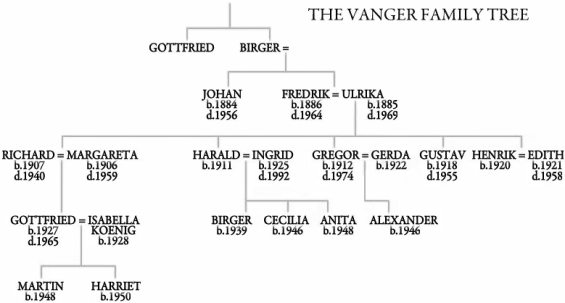
But. The book has a family tree right up front, and a couple of other charts within, and you want to be consulting them regularly. (Or is that just me?) And the problem is that it's really cumbersome to page back and forth to the family tree - the electronic "dog ear" just isn't as efficient as a post-it stuck there in a real live book. And maps - it's the kind of mystery where I found myself drawing maps in my head - who lives where, how far away is that - well, it turns out there are maps in some editions of the book - but not in the ebook! I found the maps on line and resorted to printing them out - so much for saving paper.

I still prefer real books.

15 February 2011

That Cannibalistic Princess Book

I just finished reading Peggy Orenstein's new book, Cinderella Ate My Daughter.

There's been a lot of good reviews of the book*, and I don't really need to add anything to the discussion, except to say that it's really interesting - and I think it's equally useful for parents of girls AND boys. Orenstein writes a lot about the marketing of toys to children, using the Disney Princess phenomenon as a launching pad for a broad and didactic exploration of gender differences, shopping as a stand-in for intimacy, kids getting older younger, and grown-ups staying younger longer.

She touches on the series of "Daring and Dangerous" books - questioning why some activities are in the girls' books and others in the boys' books - who's to say that girls can't juggle? She points out that while the American Girl dolls have a veneer of wholesomeness, they also foster a consumerist culture - buy more expensive stuff for your doll! Orenstein dives into film and TV as well, dissecting everything from Mulan and Mulan II to the Wizards of Waverly Place to Lindsay Lohen. 

Incidentally, the book has as terrific index: you want to see what she's got to say about the Twilight series or Toddlers and Tiaras? Look it up.

Orenstein's style is thoroughly engaging - she writes like she's thinking out loud, or having a conversation in a coffee shop. She frequently shows you her vacillations through an issue, weighing heavy handed marketing against natural developmental stages.

In short, it's an admirable book, well-researched and not screechy.


    * Three reviews that I went back and re-read after reading the book were the Times Book Review, She Started It, and Slate.


    PS: No one asked me to review this, in case you were wondering. I just wanted to tell you what I thought. Also, maybe my post title is misleading - it sort of sounds like I don't like the book? But Cinderella eating children is kind of cannibalistic, no? Or wait, Cinderella eating Barbie would be cannibalism, because they're the same species. But are girls and dolls the same species? I guess not. So it's not cannibalism. Too bad; the title stands.